


euronix
Padel Court Covers:
Custom Solutions to Protect Your Facilities with Professional Guarantee


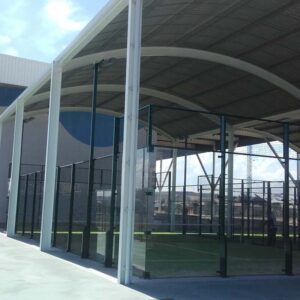

Optimize Your Padel Court All Year Round
Having an uncovered padel court in Spain is like running a restaurant that only opens when the weather’s good. It might work for three or four months a year — but the rest of the time, you’re missing out on opportunities. And revenue. A lot of it.
If you own a club and have ever said, “Hardly anyone comes in winter,” “I have to refund bookings when it rains,” or “No one wants to play at midday in summer because of the heat”… it’s time to turn things around and keep your padel court open for play all year.
Covering your court changes everything. We’ve seen clubs go from half-empty courts in winter to fully booked year-round. Residential communities tripled their court usage. Sports centers recouped their investment in under two years.
You’re one step closer to turning your court into a revenue-generating machine — 365 days a year.
Covering Padel Courts: The Ideal Solution for All Types of Facilities
Wondering if installing a cover on your padel court is worth it?
A covered court isn’t just a court with a roof it’s a court that stays open when others are shut. It’s a court your customers book even when it’s raining. It’s a court that generates income in January just like it does in July.
It’s an investment in peace of mind, stability, and profitability.
Why Covering Your Court Improves Usage and Profitability
It all comes down to numbers and the figures speak for themselves.
An outdoor court in most parts of Spain gets good use for about 7 or 8 months a year. The other 4 or 5 months, it’s half-empty. It’s too cold, it rains too much, or the midday sun in summer makes it unusable until after 7 p.m. That means you’re losing between 30% and 40% of your potential income. Every year. Permanently.
Now imagine you cover that court. Suddenly it works 12 months a year. Every day. Rain, snow, or sun your clients book with confidence because they know they’ll play no matter what.
And there’s more. A covered court also suffers less wear and tear. The turf doesn’t get scorched by the August sun. The glass panels aren’t exposed to direct hail impact. The structure isn’t hit by the kind of extreme temperature shifts that speed up corrosion. In the medium and long term, you save on maintenance. And that matters too.
Adaptable to Both Existing and New Courts
Yes, in most cases, an existing court can be covered. There’s no need to tear it down and start from scratch far from it.
What we do is assess your current structure. We check the foundation, evaluate the strength of the pillars, and inspect the overall condition. From there, we design a custom cover that fits what you already have. It adapts to the existing setup, without forcing anything.
And if you’re building a new court, it’s even easier we design the entire structure with the cover in mind from day one. But don’t worry if your court has been there for years. In 95% of cases, we can cover it without any issues.
Types of Clients: Clubs, Communities, Private Facilities
Our covers are everywhere in sports clubs with 10 courts where at least 3 or 4 need to operate year-round, in residential communities looking to make the most of a past investment, and in private centers offering padel as part of their service lineup.
They’re also found in schools that want students to play sports even when it rains, in municipal sports centers aiming to maximize facility use, and in companies with courts for employees that they actually want to see in use.
Stop depending on the weather. Choose a court cover and keep your padel court busy rain, shine, or cold.
Padel Court Covers: Types and Technical Features
Self-Supporting Metal Cover
This is the most solid and long-lasting option — and the one that will give you the fewest issues over time. It consists of a galvanized steel structure with its own pillars that support the entire weight of the roof. It doesn’t rest on the court’s frame, so it doesn’t add extra load.
The roof can be made of sandwich panels (which offer better insulation from heat and cold) or corrugated sheet metal (a more economical yet equally strong option). The entire structure is engineered to withstand strong winds, snow, and the test of time.
This is the option we recommend if you’re looking for something permanent — something that will still be standing 20 years from now. Yes, it’s more expensive up front, but in the long run, it’s the most cost-effective solution.
Tensile Fabric Cover
If you’re looking for something lighter, quicker to install, and more affordable — this is your option. A high-strength technical fabric stretched over a lightweight metal structure. It allows natural light through, creating a pleasant playing environment, and it’s perfect when you want to cover multiple courts at once without a massive investment.
The fabrics we use aren’t just standard tarps. They’re UV-treated, fire-resistant, and built to withstand winds of up to 120 km/h. And if you need to replace the fabric 12 or 15 years down the line, it’s a quick and cost-effective process.
It’s the ideal choice for clubs looking to make the leap to covered courts without a major investment — and it works.
Sandwich Panel Cover
Comfort on your padel court that’s what will attract players most. Keeping it warm in winter and cool in summer.
For that, you need sandwich panels: two metal sheets with an insulating core in between. They keep the temperature stable, reduce outside noise, and give your facility a sleek, professional finish.
It’s the perfect option for courts in urban areas where noise is a concern, or for sports centers aiming to offer the best possible experience to their players. Because let’s be honest playing on a climate-controlled court is not the same as sweating it out in a sauna-like court in August.
Wind, Rain Resistance, and Compliance with Current Regulations
All our covers are engineered according to the Spanish Technical Building Code and European regulations. That means they’re built to withstand the specific weather conditions of your region because designing a cover for Málaga is not the same as designing one for Burgos. One gets snow, the other doesn’t.
We also design the water drainage system to prevent pooling on the roof, and we make sure everything complies with fire safety and general safety regulations.
Because a well-built cover is one that meets every requirement, no shortcuts.
Padel Court Cover Price: How Much Does It Really Cost?
It depends on the specifics of each project. The easiest way to know exactly how much it will cost to cover your padel court is to request a personalized quote. But to give you a rough idea, here are some numbers:
A basic tensile fabric cover can range from €15,000 to €25,000. A metal cover with sandwich panels typically costs between €30,000 and €50,000. And if you want a full structure with side enclosures, integrated lighting, and all the extras, you could be looking at €60,000 or more.
Yes, it’s a significant investment especially that last option. But consider this: if that cover helps your court generate just €500 more per month (which is very realistic), you’ll have recovered your investment in under 5 years.
From that point on, it’s all profit. For the next 20 years or more.
Factors That Affect the Price
The price of your court cover depends on several factors:
- Type of cover: fabric, metal, or sandwich panel — each comes with a different cost.
- Court size: whether it’s a standard court or a larger panoramic model.
- Roof only or full enclosure: adding side enclosures with glass or fabric increases the cost but also significantly improves comfort.
- Location: if your court is in the middle of a city or in a remote area — transport and site access matter.
- Extras: LED lighting, automatic doors, ventilation systems, branding with your logo, etc.
We’ll provide a detailed quote that breaks down every item no surprises, no fine print. So you’ll know exactly what you’re paying for.
Financing and Phased Payment Options
We know not everyone has €40,000 sitting in the bank waiting to be spent. That’s why we offer financing options and we also allow phased payments: part when you confirm, another part when we begin installation, and the rest once everything is complete.
Because we want you to bring your project to life not leave it as a “maybe someday, when I have the money” idea.
Padel Court Roofs: Design, Materials, and Finishes
Curved, Gabled, or Flat Roofs
Curved roofs are visually appealing sleek and modern in design. They also help water run off smoothly without forming puddles. They’re commonly used in tensile fabric covers.
Gabled (double-pitched) roofs are the classic choice. They work especially well in areas with heavy rain or snow, as water drains quickly on both sides. They’re ideal for metal structures.
Flat roofs are the most budget-friendly option. They do require an efficient drainage system, but if your budget is tight and the local climate isn’t extreme, they work perfectly.
We’ll advise you on the best option based on your specific needs.
Materials: Steel, Fabric, Polycarbonate
Galvanized steel is the most durable option it withstands wind, snow, and corrosion. With proper treatment, it can last 30 years or more without issue.
Technical fabric is lightweight, cost-effective, and allows natural light through. It’s perfect for facilities looking for a quick solution without compromising on quality.
Polycarbonate offers a middle ground it lets in light, provides good insulation, and is lighter than glass. It’s ideal for covers that aim to maximize brightness without sacrificing comfort.
Customization and Aesthetics for Your Facility
Your cover can include your logo, your corporate colors, integrated LED lighting, and automated access doors whatever it takes to make it uniquely yours. To represent your brand. So your players recognize where they are the moment they see it.
How Do We Handle Padel Court Cover Installations?
Initial Consultation and Technical Design
First, we talk. You tell us about your project, your questions, your budget. We analyze your court using photos, plans, or by visiting the site if needed. Then we propose the best solution the one that fits your needs and your investment.
In-House Manufacturing and Transport
Once you give us the green light, we begin manufacturing — at our factory in Zaragoza, with our own machines and our own team.
When everything is ready, we coordinate transport using specialized companies that know exactly how to handle metal structures without damage.
On-Site Assembly and Installation
Our team arrives on-site with cranes, lifts, and all the necessary tools. In just 5 to 10 days (depending on the type of cover), your court goes from being fully exposed to fully covered and ready to be used year-round.
We supervise every detail every anchor, every weld, every bolt because we know a small mistake can become a big problem. And that’s not going to happen.
Completed Installations
We’ve been covering padel courts across Spain for 25 years. Each one different. Each with its own story.
We’ve installed covers in clubs throughout Aragón and in many other parts of the country in big cities and small towns alike.
Project Gallery with Photos and Specifications
On our website, you’ll find real photos of installations we’ve completed not just renderings or catalog images. These are real courts, currently in use, with real clients who are happy with their investment.
If you’d like to see cases similar to yours, get in touch. We’ll show you comparable projects so you can see exactly how your cover could look.
Frequently Asked Questions About Padel Court Covers
Can any existing court be covered?
Does It Require a Building Permit?
We’ll guide you through the necessary steps and if you prefer, we can handle the entire process for you.
How Long Does a Properly Installed Cover Last?
It all depends on maintenance and climate, but if the installation is done right, your cover will last for many, many years.
What Maintenance Do the Roofs Require?
We provide a maintenance manual once the installation is complete. And if you prefer, we can take care of it for you.
Want to Cover Your Padel Court? Request a No-Obligation Quote
At Euronix, we know what works. We know what lasts. And we know how to do it right from day one.
Write to us and tell us about your project. We’ll send you a personalized quote within 48 hours no obligation, and everything crystal clear.
Take your business and your profitability to the next level. We’re here to help you make it happen.